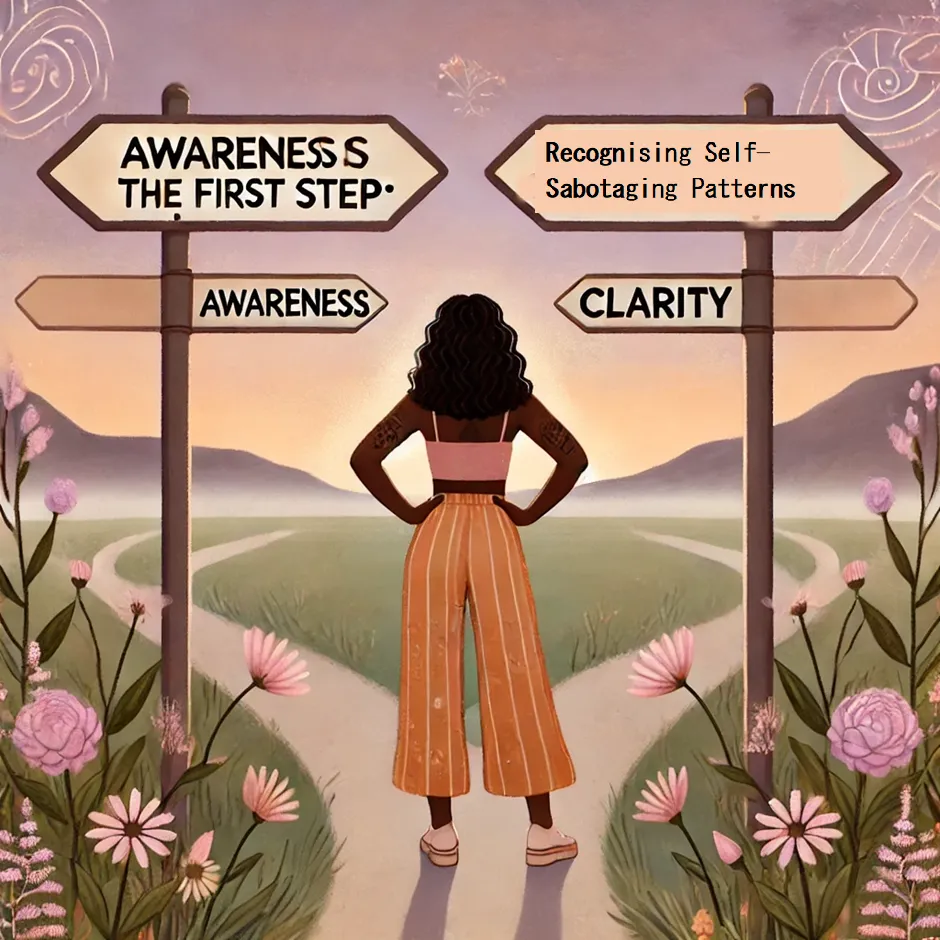
Awareness is the First Step: Recognising Self-Sabotaging Patterns
Have you ever set out to achieve a goal, only to find yourself mysteriously blocked at every turn—not by external forces, but by your own actions? You’re not alone. Self-sabotaging habits are more common than we think, and they often stem from deep-seated fears and low self-worth. But here’s the good news: by shining a light on these patterns, you can begin to break free from them.
Self-sabotage is rarely obvious in the moment. It hides beneath rational excuses, “valid” reasons, and familiar habits that feel comfortable—even when they hold you back. And because these behaviours operate quietly beneath the surface, many people don’t realise how often they are the ones blocking their own progress, opportunities, and growth.
Let’s explore what self-sabotage really is, why we do it, and how you can take that all-important first step towards awareness.
Identifying Self-Sabotage
Self-sabotage can take many forms, and it’s not always easy to recognise. Here are some of the most common behaviours:
Procrastination: Putting off tasks or goals, often until it’s too late to do them justice.
Perfectionism: Setting impossibly high standards that prevent you from starting or completing something.
Overthinking: Spending so much time analysing or doubting yourself that you remain stuck in indecision.
Negative self-talk: That inner voice that tells you you’re not good enough or that you’ll fail anyway.
Avoidance: Dodging opportunities, conversations, or decisions that could lead to growth or success.
But self-sabotage can also show up in subtle ways:
✨ Staying in relationships that drain you
✨ Overcommitting so you never have to face your real goals
✨ Starting new projects before finishing old ones
✨ Seeking validation instead of trusting yourself
✨ Minimising your strengths
If any of this sounds familiar, don’t worry—you’re not broken, and you’re certainly not alone. Self-sabotage is a learned behaviour, which means it can be unlearned too.
Why We Self-Sabotage
At its core, self-sabotage is often a subconscious attempt to protect ourselves. But protect ourselves from what?
Fear of Failure: If you don’t try, you can’t fail—or so the logic goes. This fear can keep you safely within your comfort zone but at the expense of growth.
Fear of Success: Success can bring change, higher expectations, and the risk of being seen as a fraud. This fear, linked to imposter syndrome, can make success feel just as intimidating as failure.
Low Self-Worth: If you don’t believe you’re worthy of success, happiness, or love, you might unconsciously act in ways that confirm this belief.
Need for Control: Self-sabotage gives a sense of control because you’re the one creating the outcome—even if it’s not the one you want.
Sometimes, we sabotage ourselves because succeeding would require us to become a version of ourselves we haven’t yet met.
That can feel frightening.
Uncertain.
Unfamiliar.
Understanding these underlying reasons is essential because awareness creates space for change.
The Psychology Behind Self-Sabotage
Self-sabotage is often tied to old beliefs formed in childhood or during painful experiences. When something becomes familiar—even if it’s unhealthy—the brain may interpret it as “safe.” So you unconsciously recreate situations that match your internal identity.
For example:
🌿 If you’ve always believed you’re “not good enough,” success feels unsafe.
🌿 If you grew up around chaos, peace may feel uncomfortable.
🌿 If you were taught to stay small, visibility feels threatening.
This is why self-sabotage is not a personality flaw.
It is a protective mechanism that has overstayed its welcome.
When you understand this, compassion replaces shame—and compassion is the doorway to transformation.
Building Self-Awareness
So, how do you start recognising these patterns in your own life? Here are some practical steps:
1. Notice Your Triggers
Pay attention to when self-sabotaging behaviours show up. Is it when you’re under pressure? When you’re on the verge of achieving something important?
2. Reflect on Your Emotions
What feelings accompany these behaviours? Fear? Guilt? Shame? Journaling can help you untangle the emotions beneath your actions.
3. Look for Patterns
Are there specific areas of your life—career, relationships, health—where self-sabotage is most common? Recognising patterns helps you see the bigger picture.
4. Practice Mindfulness
Becoming present to your thoughts and feelings, without judgement, can help you spot self-sabotaging tendencies before they take over.
5. Seek Feedback
Sometimes, a trusted friend, coach, or mentor can spot things you might not see in yourself.
Recognising self-sabotaging patterns is not about criticising yourself; it’s about understanding yourself. Awareness is the first step towards meaningful change, but remember to approach this journey with self-compassion.
You didn’t develop these habits overnight, and you won’t break them overnight either. But with each step you take towards awareness, you’re reclaiming your power and opening the door to a life where you stop standing in your own way.
Stepping Into Self-Support Instead of Self-Sabotage
As awareness grows, new choices become possible.
Instead of shutting down, you pause.
Instead of judging yourself, you listen.
Instead of running, you stay present.
Instead of sabotaging, you support yourself.
Over time, this shift becomes your new normal.
Self-support looks like:
✨ Setting boundaries
✨ Celebrating your progress
✨ Speaking kindly to yourself
✨ Taking imperfect action
✨ Asking for help
✨ Choosing long-term growth over short-term comfort
When you shift from fear to belief, your entire life begins to expand.
A Gentle Next Step — Break Your Self-Sabotage Cycle from Within
The outdated invitation at the end has been replaced with a more aligned, powerful next step:
If you're ready to stop standing in your own way and start building the self-belief required for real, lasting change, I’d love to guide you.
The Self-Belief Hack™
A transformative 7-step journey designed to help you:
🌿 Understand the roots of your self-sabotage
🌿 Build the self-belief needed to move forward
🌿 Break limiting patterns with compassion
🌿 Shift from fear to confidence
🌿 Become the version of yourself you keep dreaming about
Your next chapter begins with one gentle step.
You are capable.
You are deserving.
And you are ready — even if it doesn’t feel like it yet.


